What market are we in now- Buyers or Sellers?

0001

It does matter what type of market we are in for the perspective of negotiating and making the deal happen. As Buyers and Sellers, you need to understand this distinction when working with your agent. Again Real estate is LOCAL. It doesn’t matter Houston is BUYER’S market but there are pockets of Houston which are still SELLER’S market and need to maneuver cautiously working with your agent.

Are you one of these Sellers? – 2018 Sellers Survey Responses & Trend

0001

We help the sellers to price their home correctly after analyzing the market closely and also help them by only charging Flat rate commission or maximum of 1% from the listing agent side. If you are interested in selling your home, please don’t hesitate to contact us.

2019 Texas Housing & Economic Outlook – By Texas A & M Real Estate Center

Texas Economy Cools Off Slightly

The U.S. and Texas economies will continue to expand in 2019 but at noticeably decelerated rates.
Moderate oil prices (around $50 a barrel), softening global economic activity, uncertain international trade negotiations, and volatility in the financial markets will likely cause the Texas and U.S. economies to lose some forward momentum. Expect U.S. GDP growth to decline to around 2.7 percent in 2019 and about 2.4
percent in 2020 from roughly 3.1 percent in 2018. Texas GDP growth is expected to decline from more than 4.5 percent in 2018 to 4 percent in 2019 and around 3.7 percent in 2020.

Texas employment should grow about 2.7 percent in 2019 compared with 3 percent in 2018. U.S. employment growth should remain roughly the same at around 1.5 percent
and slow to 1.3 percent in 2020.

Texas Housing Market Reverts to ‘Normal’

The Texas housing market slowed in 2018 as sales rose 1.7 percent compared with 4.1 the previous year. The shortage of homes priced less than $300,000 combined with
rising interest rates weighed on overall activity. Listing inventories inched forward but remained tight relative to demand.

Housing demand showed signs of normalizing, particularly in North Texas, after a multiyear period of record increases. Projected population and job growth, however, suggest healthy demand for the duration of the current economic expansion. The recent pause in sales activity slowed home price appreciation to a historically normal rate. Rising interest rates will hinder housing affordability statewide. Slowing economic and employment growth along with affordability issues and increasing
mortgage interest rates will cause housing sales activity to soften. Price pressures are projected to ease as housing sales weaken and homebuilders stretch to increase production in the entry and first move-up markets.

To see full report, click below,
2019+Texas+Housing+and+Economic+Outlook+1_29_19

Home Warranty – To buy or not to buy?

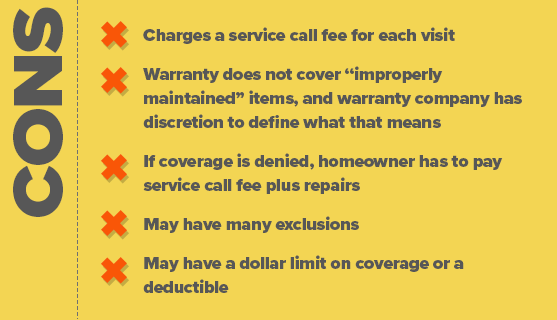
This questions comes all the time from my clients. Whether it’s good to buy/have home warranty or it’s just waste of money. See the Pro’s and Con’s below.

unnamed

unnamed (1)

Like any form of insurance, when you have it and you don’t need it, it’s frustrating, but when you need it and you don’t have it, it’s even worse. But Home warranty is not like Home insurance, there are lots of companies which are there for namesake but some companies which really try to do the right thing. Some really take care of the client by not giving excuses to pay for the repairs and just do it. Many just find excuses like code violation and client has to pay half of it and they will cover the rest. Don’t fall for it. That half you pay might be the full cost for the repair. Alternatively, you could take the money you would have spent on a home warranty and put it in a rainy-day fund dedicated solely to the repair and replacement costs of your appliances and systems.

One of the best things a home warranty can provide for you is peace of mind. New homeowners and long-time homeowners alike can take comfort in the fact that surprise breakdowns could be taken care of with just a small cash outlay and a lot less hassle than hunting up a repair or replacement provider on your own. Yes, it is only for smaller repairs not for bigger ones. Don’t depend on them fully!!

Real Estate Investment Myths Debunked

Investing in real estate is an effective avenue to help grow your wealth. But, before you invest in real estate – or advise your clients to do so – there are several concepts you need to understand. Keller Williams Co-Founder and Chairman of the Board Gary Keller explores the fundamental truths of real estate investment and the models that drive it in The Millionaire Real Estate Investor. He proves that investing can be done easily if you follow the models, strategies and systems laid out for you.

In the process of completing the book, Keller and his colleagues interviewed Millionaire Real Estate Investors and found that a clear pattern emerged. At one time or another, these high-achieving investors had to confront a fear or persistent doubt that later proved to be unfounded. It is fear and myths that hold people back from financial freedom. As the real estate expert, it is YOUR responsibility to recognize your clients’ fears and, with compassion, move them from fear to confidence through education and support.

Myth #1: I don’t need to be an investor – my job will take care of my financial wealth.

Truth: Yes, you do need to be an investor – your job is NOT your financial wealth.

It is almost epidemic how many people think they don’t need to be an investor. Usually that happens because they believe consciously or unconsciously that the path to financial wealth is through one’s job. It is highly unlikely that your job creates enough income for you to set aside a manageable percentage and, at an average rate of interest, still achieve true financial wealth. Prosperity can provide a false sense of security. People may overspend and underinvest to the point that they wake up one day and realize they are on the downslope of their primary income-earning years and their lifestyle is about to come to an end.

Myth #2: Investing is complicated.

Truth: Investing is only as complicated as you make it.

Here’s the truth: Investing is complicated. But, to be fair, almost anything taken as a whole can appear more complicated than it really is. Take your car. You don’t have to be a mechanic or an engineer to drive it, right? Of course not. All you have to know are the basic rules of the road and how to drive. Investment is no different. The trick is to take a step back and identify the aspects that matter most.

Myth #3: The best investments require knowledge most people don’t have.

Truth: Your best investments will always be in areas you can or already understand.

One of the greatest lessons I’ve learned about investing is this: Investing in what you don’t know isn’t investing at all. To me, the real nature of investing is always to invest in what you know and fully understand. Choose an area that you already know or one that greatly interests you and commit to becoming an expert in it over time.

Myth #4: Investing is risky – I’ll lose my money.

Truth: Investing, by definition, is not risky.

Great investors do not think of investing as risky. For them, it’s not about ignoring risk; instead, it’s about following sound investment principles and models. By doing that, they take risk out of the game. Investing like a Millionaire Real Estate Investor isn’t about taking risks. It’s about having sound criteria, the patience to find the opportunity, and a willingness to take the correct action quickly.

Myth #5: It doesn’t matter if I want or need it – I just can’t do it.

Truth: You cannot predict what you can and cannot do until you try.

There’s no way for you or anyone else to know your true financial potential. And, because your true financial potential is unknown, it makes no sense to place limits on it. “I can’t do it” becomes another rationale for not trying, for not stretching, for not exploring your potential.

Courtesy: Keller Williams, The Millionaire Real Estate Investor book Author